Bee Hotels
Kings Park and Botanic Garden is home to two bee hotels.
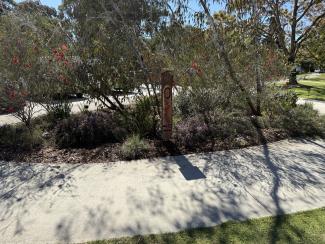
One is located in Rio Tinto Naturescape Kings Park, and the other is located in the Poolgarla Family Area.
Produced in partnership with WA Loves Nature, the bee hotels are part of the West Perth Bee Scene Trail which aims to educate visitors about the importance of native bees and how to encourage them into local backyards.
About native bees
There are over 2,000 native bee species in Australia, and more than 800 of these are found here Western Australia. Many of our WA native bee species are not found anywhere else in the world.
Native bees collect nectar and pollen from flowers and play a vital role in pollinating many native plants. Some of these plants can only be pollinated by native bees—so if native bees disappear, these plants will disappear too.
Native bees are not aggressive, but female bees may sting if physically handled. For our bees' safety and your own, please do not touch the bee hotels.
Learn more about common species of native bees found in Western Australia and native bee-attracting plants here.
About bee hotels
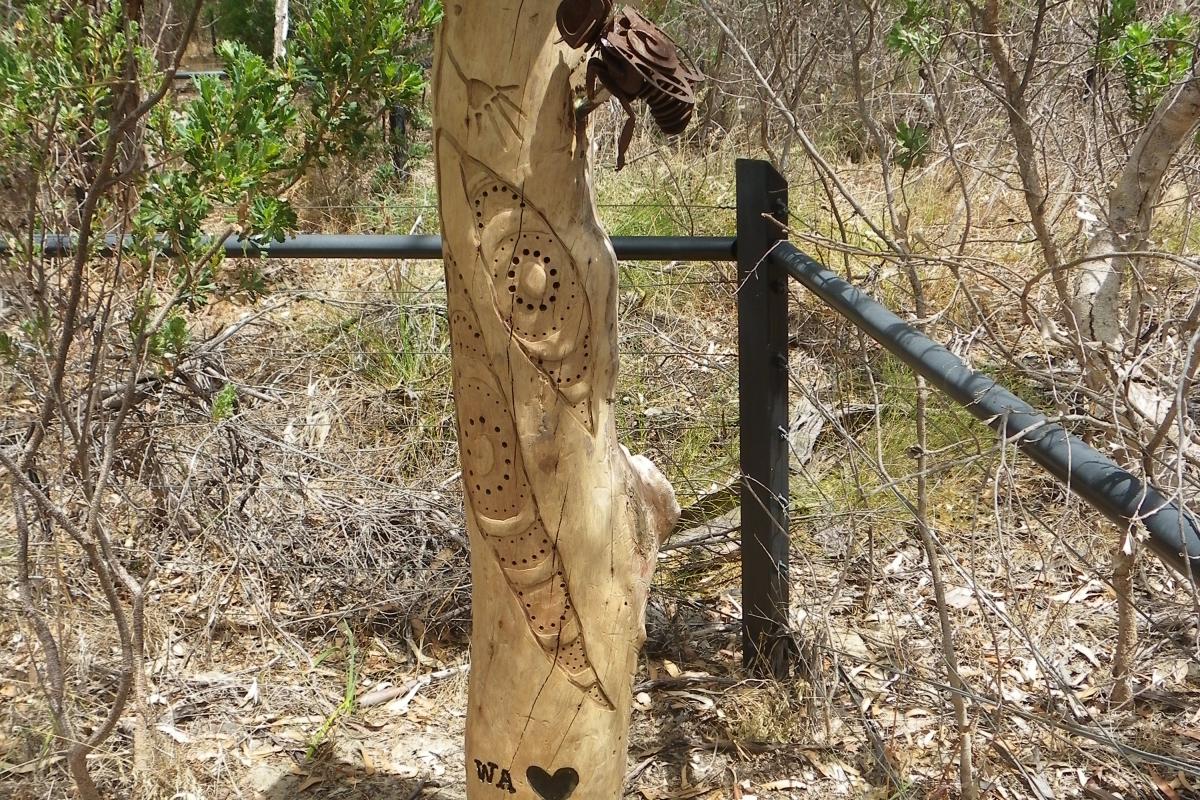
Bee hotels support cavity-nesting native bees by providing a structure that mimics a natural nesting site. The native bee species found here in Perth typically prefer hole diameters of 2-8mm and depths of at least 120mm, which feature in the bee hotels.
The bee hotel in the Poolgarla Family Area features an interpretation of the Bull Banksia (Banksia grandis), known in Noongar as Poolgarla, in keeping with the name of the area where it is placed.
The bee hotel in Rio Tinto Naturescape Kings Park features an interpretation of a Boorna Gnamma. Boorna Gnamma is a type of tree that is carefully manipulated by Noongar people over many decades to form a large bowl shape in the trunk, for the purpose of collecting rainwater. The design on this bee hotel represents the significant Tuart Boorna Gnamma that lives in Kaarta Koomba (Kings Park). The leaves, fruit and flower represent the tuart, and the circular patterns inside represent the ripples of the rainwater.
Bee Hotel in Rio Tinto Naturescape Kings Park